How to Launch a White Label Soap Line for Your Retail Brand
A yoga studio. A boutique hotel. A gift shop with a strong local brand. A salon that’s been building a loyal clientele for a decade. These businesses already have something most soap brands spend years trying to create: a trusted relationship with their customers and a physical space in which to sell.
What they often don’t have is a product line that reflects that brand. A white label soap partnership changes that — without requiring them to develop a formula, hire a chemist, or invest in manufacturing infrastructure.
This guide is written specifically for retail brands looking to launch their own branded soap line using white label manufacturing. If you’re still weighing white label against private label, start with White Label vs. Private Label Soap: What’s the Difference? — then come back here when you’re ready to move forward.
Table of Contents
- Why White Label Is the Right Model for Retail Brands
- Step 1: Define Your Product and Brand Fit
- Step 2: Choose Your Formula
- Step 3: Design Your Label and Packaging
- Step 4: Place Your First Order
- Step 5: Price, Position, and Sell
- What to Look for in a White Label Manufacturer
- Frequently Asked Questions
Why White Label Is the Right Model for Retail Brands
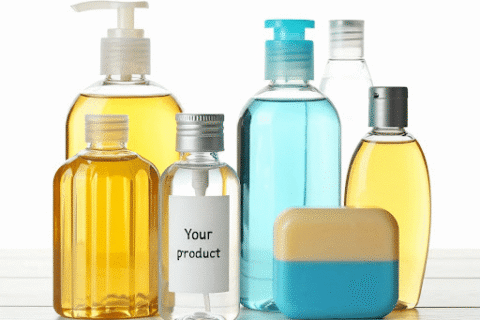
White label soap means you’re selling a proven formula under your own brand. The manufacturer produces the product — your label, your colors, your name on the bottle. You’re not developing a formula or running a production operation. You’re putting your brand on a product that already works.
For retail brands, the logic is straightforward:
Speed. A white label product can be on your shelves in weeks. There’s no formula development cycle, no sample rounds, no stability testing to wait out. The product is ready. You’re adding a label.
Low minimum order quantities. Most retail businesses don’t have the volume requirements of a dedicated product brand. White label manufacturers who work with small and emerging brands offer MOQs that make it viable to start small, test sell-through, and reorder based on actual demand.
Brand consistency without complexity. A branded hand soap on your reception desk or retail shelf is a low-effort, high-visibility extension of your brand. Your customer sees your name every time they use it. That kind of daily impression compounds over time.
Margin. Branded soap sells at a premium. A product that costs you a few dollars per unit can retail at two to four times that, depending on your market and packaging quality. The margin is one of the reasons salons and spas have been selling private-label personal care for years.
What white label soap manufacturing offers retail brands specifically is a path to a polished, sellable product without any of the complexity of building a product from scratch.
Step 1: Define Your Product and Brand Fit
Before you contact a manufacturer, answer two questions: what product do you want to sell, and how does it fit your brand?
Product type. The most common white label soap products for retail are:
- Liquid hand soap (pump bottles) — universally relevant, easy to display and sell
- Body wash or shower gel — appropriate for wellness brands, hotels, and gift sets
- Foaming hand soap — popular in boutique and premium-positioned settings
- Hand sanitizer with soap or moisturizing additives
Most retail brands start with hand soap. It’s the most accessible entry point — high usage, easy to display, and relevant in virtually any retail or service setting.
Brand fit. Consider how the product will sit alongside your existing brand. A yoga studio with a wellness-forward identity might want a sulfate-free, botanically scented formula in clean, minimal packaging. A hotel with a heritage aesthetic might prefer a classic design with a warm, sophisticated scent. A gift shop might want something that photographs well and works as part of a curated set.
The formula and packaging choices you make in the next steps should flow from this brand context — not the other way around.
Step 2: Choose Your Formula
White label manufacturers maintain a library of tested formulas across product types. Your job is to select the formula that best matches your product brief.
When reviewing formula options, evaluate against these criteria:
Performance. Does the formula deliver the skin feel, lather, and rinse behavior you want customers to experience? Request samples — don’t rely on descriptions alone.
Ingredient profile. Does the formula align with your brand’s ingredient standards? Brands in natural or wellness markets may want sulfate-free, paraben-free, or EWG-reviewed formulas. Personal care manufacturers with strong green chemistry programs will have more options in this category.
Scent options. Most white label manufacturers offer multiple fragrance variants for each base formula. Choose a scent that’s distinctive enough to feel branded and consistent with your positioning. Fragrance-free is also a legitimate option for brands targeting sensitive skin or clinical settings.
Regulatory compliance. In the US, cosmetic soap products must comply with FDA labeling regulations. Your manufacturer should be familiar with these requirements and guide you through what belongs on the label. For reference, FDA cosmetics labeling guidance covers the essentials.
Step 3: Design Your Label and Packaging
Your packaging is what makes a white label product feel like your product. The formula is shared — the brand isn’t.
Label design. Work with a designer who understands retail and print requirements. Your label must include:
- Brand name and logo
- Product name and type
- Net weight or volume
- Full ingredient list (INCI names, in descending order of concentration)
- Manufacturer or distributor name and address
- Country of origin
Beyond compliance, your label should communicate your brand at a glance. Color, typography, finish (matte vs. gloss), and label shape all contribute to perceived quality and shelf presence.
Container format. White label manufacturers typically offer a range of container options — different sizes, pump types, and materials. If you already have a packaging supplier, confirm your manufacturer can fill your containers. If not, your manufacturer may be able to source packaging directly or point you toward suppliers they work with. Contract packaging that handles filling, labeling, and assembly under one roof removes a significant coordination burden.
Sample the finished product. Before committing to a full run, see a sample of the formula in your actual packaging with your actual label. Colors print differently than they look on screen. The pump mechanism matters. The bottle size needs to feel right in the hand.
Step 4: Place Your First Order
Once you’ve approved your formula and packaging samples, you’re ready to order.
For a first run, order conservatively. The goal is to validate that your customers respond to the product, learn what your sell-through rate actually looks like, and identify any adjustments you want to make before ordering larger volumes.
Discuss your target quantity with your manufacturer early. A reputable white label partner — like a white label soap manufacturer with experience working with retail clients — will offer realistic guidance on MOQs rather than pushing you toward a quantity that doesn’t fit your stage.
Lead time. For white label with an existing formula and your label applied, typical lead times run two to four weeks from order confirmation, depending on production schedule and packaging availability. Confirm this before committing to a launch date.
Reorder planning. Once you’ve validated the product, build a reorder cadence into your inventory process. Running out of stock — especially of a product your regular customers have come to expect — is a missed revenue and brand opportunity.
Step 5: Price, Position, and Sell
White label soap sells at a premium when it’s positioned correctly. A few principles:
Price to reflect your brand, not the cost. Your customers are not buying generic soap at a dollar-store price point. They’re buying your brand, your aesthetic, and the trust they’ve built with your business. Price accordingly.
Display matters. A branded soap displayed prominently at a checkout counter, a sink, or a product shelf performs very differently from the same product stored behind a counter. Make the product visible and accessible.
Tell the story. “This is our house soap — we had it made for us” is a conversation starter, not a liability. Customers respond positively to products that reflect intentionality. Consumer trust in retail-branded products has grown steadily — your name on the label is an asset, not a compromise.
Offer multiple sizes or formats. A retail-size pump for sale alongside a complimentary travel size used in your service creates two touchpoints. A gift set including your soap with one or two other branded products increases average transaction value.
What to Look for in a White Label Manufacturer
Not all white label manufacturers are set up to work well with retail clients. These are the criteria worth prioritizing:
Formula quality and variety. A manufacturer with a deep, tested formula library gives you more options and a faster path to a product that fits your brand. Consumer-tested formulas across personal care and household categories are a sign of serious production experience.
In-house QC. For a retail product that carries your name, consistency matters. An in-house laboratory means batch-to-batch quality is managed by the same team producing your product — not outsourced and checked after the fact.
Low, realistic MOQs. A manufacturer who pushes you toward more volume than you need on a first order isn’t thinking about your business — they’re thinking about their production schedule.
Responsive communication. A manufacturer who’s hard to reach during the sales process will be harder to reach when something needs resolving. Responsiveness is an early signal of how the relationship will work under pressure.
Cosco has operated out of a 40,000 sq ft facility in Ridgewood, NY since 1966, with 12+ filling lines and in-house quality control at every stage. The range covers everything from small initial runs for retail clients testing a new product line to high-volume reorders once demand is established. And when your brand is ready to move to an exclusive formula, the Private / White Label service supports that transition without switching partners.
Frequently Asked Questions
A white label product using an existing formula and your label can be ready in two to four weeks from order confirmation, depending on your manufacturer’s production schedule and how quickly your packaging and label are finalized. This is significantly faster than private label or custom formulation, which require formula development cycles.
Minimum order quantities vary by manufacturer. For retail brands launching a first product, the most important thing is finding a manufacturer with low MOQs who won’t require you to commit to more inventory than you can realistically sell on a first run. Discuss your target quantity upfront — a good partner will give you a straight answer.
You don’t need to have everything finalized, but walking in with these four things makes the first conversation more productive: (1) your product type and preferred format (pump, foaming, gel); (2) a scent direction or reference — even something like “warm and herbal” or “clean and citrus”; (3) your packaging preference or a rough sense of what you’ve seen that you like; and (4) a rough order quantity for a first run. Everything else can be worked out in the conversation.
Yes. Many retail brands launch with a single hero product, then add a second scent or formula variant once the first is validated. Confirm with your manufacturer whether different variants require separate minimum order quantities or can be combined into a single order.
Hand soap sold as a cosmetic must include: brand name, product name and type, net contents, full ingredient list in INCI format in descending order of concentration, and manufacturer or distributor name and address. FDA cosmetics labeling regulations are the authoritative reference. Your manufacturing partner should guide you through compliance during the label review process.
Yes. Most manufacturers accept client-supplied packaging as long as it’s compatible with their filling equipment and the formula viscosity. Confirm compatibility before you order your containers — discovering a mismatch after filling is an expensive problem to fix.
There’s no universal formula, but a common approach for premium retail is to price at two to four times cost, depending on your category, packaging quality, and brand positioning. A yoga studio charging $18 for a branded hand soap at the reception desk is selling an experience, not a commodity. Pricing that reflects your brand’s positioning is more defensible than pricing based on what you paid for the product.
Yes — hospitality is one of the most natural use cases for white label soap. Branded amenities at a boutique hotel communicate attention to detail in a way that generic dispensers don’t. White label is the fastest path to a cohesive branded product in bathrooms, at sinks, and in welcome kits.
Ready to Put Your Brand on a Soap?
You don’t need a formula, a production facility, or a chemistry background. You need a brand your customers trust, a product concept that fits, and a manufacturing partner who can deliver a finished product at a quality that reflects your standards.
Contact the Cosco team to talk through your retail soap project. With nearly 60 years of manufacturing experience, low MOQs for first-time runs, and a formula library across every personal care category, we’ll help you move from product idea to shelf-ready in weeks — not months.