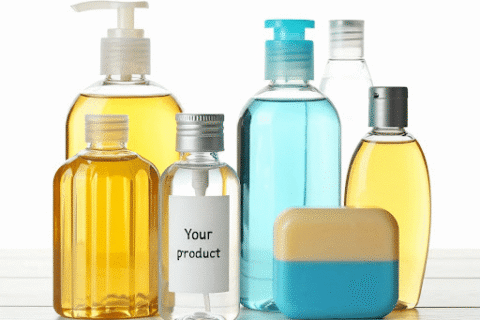
White Label Soap Manufacturer for Your Brand
A white label soap manufacturer produces finished, ready-to-brand soap products — hand soaps, body washes, liquid detergents, and more — that brands purchase, label, and sell under their own name. The formula is proven and in production. You apply your brand identity and get to market without the time or cost of product development.
It’s the fastest path from “I want a branded soap product” to having one on a shelf.
This page explains what white label soap manufacturing involves, what it gives you (and what it doesn’t), who it’s right for, and how to choose a manufacturer who’ll make your launch reliable.
Table of Contents
- What Is a White Label Soap Manufacturer?
- What White Label Gives You
- How White Label Soap Manufacturing Works
- Who White Label Soap Manufacturing Is Right For
- White Label vs. Private Label: When to Choose Each
- All Three Models at a Glance
- What to Look for in a White Label Soap Manufacturer
- Cosco’s White Label Program
- Frequently Asked Questions
What Is a White Label Soap Manufacturer?
A white label soap manufacturer is a contract production facility that makes standardized, pre-formulated soap products available for multiple brands to purchase, label, and sell. The formulas are developed, tested, and produced at scale by the manufacturer. You purchase the product, apply your label and branding, and sell it as your own.
The term “white label” comes from the idea of a blank label — a product ready to carry any brand’s identity. In practice, white label products are fully developed, quality-tested, and production-ready; you’re not buying unfinished goods. You’re buying a finished product without the exclusivity of a formula made only for you.
White label is one of three main contract manufacturing models. The others are private label (a formula made exclusively for your brand, with customization) and custom formulation (a formula developed from scratch). White label is the fastest and lowest-cost of the three.
For a detailed side-by-side comparison, see White Label vs. Private Label Soap: What’s the Difference?
Cosco’s Private / White Label service covers both white label and private label programs across product categories.
What White Label Gives You
White label soap manufacturing delivers several things that matter for brands getting a product to market efficiently:
Speed. The formula already exists. It’s been tested, stabilized, and produced before. There’s no development cycle, no sample rounds, no stability testing to wait for. The time between deciding to launch and having a product ready to sell is measured in weeks, not months.
Proven formulas. White label products are tested in production and — typically — tested with consumers. You’re not launching an unproven formula and hoping it performs. You’re selecting from options that already work.
Lower upfront cost. No formula development fees. No chemistry work. The manufacturer’s investment in developing the formula is spread across all the brands that use it. Your cost is the product itself, not the development.
Focus on your brand. What white label frees you to focus on is the part most brand builders are actually good at: brand identity, packaging design, marketing, distribution, and customer relationships. The manufacturing complexity is someone else’s problem.
Scalability. A white label product that sells well can be reordered at whatever volume your demand supports. You’re not constrained by the size of your first development run.
What white label doesn’t give you is exclusivity. Other brands can buy the same formula, apply their own label, and sell a functionally identical product. If your brand’s differentiation depends on a unique formula, private label or custom formulation is the right direction.
How White Label Soap Manufacturing Works
The process for launching a white label soap product is straightforward:
Formula selection. You review the manufacturer’s formula library and identify products that fit your brief — product type, intended use, performance characteristics, and scent profile. For personal care categories like hand soaps and body washes, most white label manufacturers offer multiple options.
Sample review. Request physical samples of candidate formulas before committing to a production run. Evaluate scent, lather, viscosity, skin feel, and rinse behavior. Confirm the product performs in a way that reflects your brand.
Packaging selection. Choose your container format — size, pump type, material. Confirm compatibility between the formula and your packaging. If you need help sourcing packaging, a manufacturer with supplier relationships can guide the process or refer you to partners. Contract packaging that handles filling, labeling, and assembly under one roof removes significant coordination complexity.
Label design and compliance review. Your label is designed with your brand identity and reviewed for compliance with FDA cosmetic labeling requirements — ingredient list, net contents, manufacturer or distributor information. Compliance review happens before production, not after.
Production and delivery. Your order is placed, the product is filled and labeled, and it ships to you. Lead times for white label runs are typically two to four weeks from confirmed order, depending on production scheduling.
For retail brands specifically, How to Launch a White Label Soap Line for Your Retail Brand covers the full launch sequence in detail.
Who White Label Soap Manufacturing Is Right For
White label works well for any business where speed, cost efficiency, and a reliable branded product matter more than formula exclusivity:
Retail and hospitality brands adding a branded soap line to complement an existing business — a salon, boutique hotel, gift shop, or wellness studio — are natural white label customers. The product reflects the brand; the formula uniqueness matters less than the speed to shelf.
New brands testing a category before committing to a custom formula benefit from white label’s lower risk. Launch with a proven product, validate demand, learn what your customers actually respond to — then decide if a proprietary formula is worth the investment.
E-commerce sellers building personal care brands who want to launch quickly and iterate based on customer feedback use white label as a starting point. Many transition to private label as their volume and brand identity mature.
B2B and institutional buyers — businesses that want a branded cleaning or personal care product for their facility, staff, or clients — often find white label the most efficient model. The household cleaning and personal care categories both offer white label options.
Subscription box services including a branded soap as part of a curated box can move quickly with white label and maintain a consistent product across boxes without formula development overhead.
Retailer and brand-owned products have grown steadily across consumer goods as brands recognize that product quality — not just formula exclusivity — drives consumer loyalty; the Private Label Manufacturers Association (PLMA) is the leading trade body for the category.
White Label vs. Private Label: When to Choose Each
The difference between white label and private label comes down to one question: does your brand require a product no other company is selling?
White label is shared. The same formula is available to multiple brands. Your differentiation comes from your packaging, your brand story, and your marketing.
Private label is exclusive. The formula — or a customized version of a base formula — is made only for you. Your scent profile, your ingredient adaptations, your product.
Most brands that start with white label eventually ask this question as they grow. For early-stage launches, white label is almost always the right call: faster, more affordable, lower risk. For established brands with a clear product identity, private label delivers the exclusivity that justifies the additional development time.
A manufacturer who supports both models makes the transition easy. You’re not starting over with a new partner — you’re taking the next step with one who already knows your brand.
All Three Models at a Glance
| White Label | Private Label | Custom Formulation | |
|---|---|---|---|
| Speed to market | 2–4 weeks | 6–12 weeks | 3–6 months |
| Formula exclusivity | None — shared formula | Yes — made for your brand only | Yes — built from scratch for you |
| Upfront cost | Lowest | Moderate | Highest |
| Customization | Label and packaging only | Scent, color, minor formula adjustments | Full formula control |
| Formula ownership | No | Typically no (exclusivity, not ownership) | Yes — negotiable |
| Minimum order | Lowest | Low to moderate | Moderate |
| Development work | None | 1–3 sample rounds | Full brief-to-sign-off process |
| Best for | Fast launches, market testing, retail add-ons | Brands wanting product exclusivity | Brands where the formula is the product |
For a detailed breakdown of white label versus private label specifically, see White Label vs. Private Label Soap: What’s the Difference?
What to Look for in a White Label Soap Manufacturer
Formula range and quality. The depth of a manufacturer’s white label formula library determines how much choice you have. More formulas across more categories means a better chance of finding something that genuinely fits your brand — not just the closest available option.
In-house QC. Your brand name is on the product. Batch-to-batch consistency is a brand requirement, not just a production detail. An in-house laboratory means quality is managed at the source.
Low MOQs. A white label product on a first run should be an amount you can actually sell through before reordering. Manufacturers who offer genuinely low minimums make white label accessible to businesses at early stages.
Turnaround reliability. A lead time that’s accurate is worth more than a lead time that sounds fast. Ask about average production schedules and what happens when your order comes in during a busy period.
Packaging support. If you need help sourcing containers, closures, or labels, a manufacturer with supplier relationships and end-to-end capability is more useful than one who only handles filling.
Cosco’s White Label Program
White label manufacturing is only as useful as the formula library behind it. A library with two options in each category is a bottleneck; a library built over decades across every major product category is something different.
Cosco’s white label formula library covers personal care, household cleaning, laundry, automotive, marine, and specialty categories — developed and refined across nearly 60 years of active production. The formulas in the library have been produced in volume, tested for stability, and used by brands across a wide range of markets. When you select one, you’re starting from something that’s been proven to work.
Production capabilities include multiple fill sizes from the same facility — so a brand launching a retail pump size today can add a bulk refill format on the next order without switching manufacturers. In-house quality control at every stage means the product that ships on order ten is consistent with what shipped on order one.
White label and private label are both available. If your brand’s needs evolve — to formula exclusivity, custom scent development, or a fully original formula — the same team supports that transition.
Frequently Asked Questions
A white label manufacturer produces formulas available to multiple brands — the same product, different labels. A private label manufacturer produces a formula exclusively for one brand, often with customization options. If exclusivity matters to your positioning, private label is the right model. If speed and cost efficiency matter more, white label is the better starting point.
White label formulas are typically offered with a fixed set of scent options — you choose from what’s available rather than developing something new. If you need a scent profile that’s truly unique to your brand, private label with custom fragrance development is the appropriate model.
Minimum order quantities vary by manufacturer and product type. Cosco offers industry-low minimums on white label products, designed to be accessible to brands at early stages rather than requiring commitment to large initial volumes.
White label is the fastest path to a branded soap product. With an existing formula and your label ready, a first production run typically ships in two to four weeks from confirmed order. Compare that to 6–12 weeks for private label or 3–6 months for custom formulation.
No — the formula belongs to the manufacturer. Multiple brands can use it. What you own is your brand identity, your label, and your packaging design. If formula ownership is important to your brand strategy, you need a custom formula or a private label arrangement with explicit exclusivity terms.
White label soap manufacturing covers personal care (hand soaps, body washes, shampoos), household cleaning products, laundry detergents, specialty products, and more. The formula library varies by manufacturer — confirm that your product category and type are covered before engaging.
Yes. Many brands start with white label, validate demand, and then move to private label when they’re ready to invest in formula exclusivity. A manufacturer who supports both models makes that transition smooth — you’re building on an existing relationship rather than starting over.
Ready to Launch Your White Label Soap Product?
If you know what kind of product you want to sell and you’re ready to put your brand on it, white label is the fastest path forward.
Contact the Cosco team to review formula options, discuss packaging, and get a clear picture of what your first production run involves. With nearly 60 years of experience and a formula library across every major product category, we’ll help you find the right product and get it to market efficiently.